The good news for most homeowners
Port St. Lucie's Landscape and Land Clearing Code (Chapter 154) protects trees with a diameter of 12 inches or more at breast height and native palms with at least ten feet of clear trunk. But — and this is the part that surprises people — platted single-family lots are specifically exempt from the tree-preservation requirements, as long as the minimum residential landscaping is maintained. On top of that, non-native fruit trees like mango, avocado and citrus aren't counted at all. In practice, that means the oak, pine or palm in your own established back yard usually comes down without a city tree-removal permit.
That is genuinely different from cities like Palm Coast, where nearly every removal needs a permit. In Port St. Lucie, the everyday homeowner removal on a built single-family lot is typically exempt. We still confirm it with Planning & Zoning for your specific address before we cut — because "usually" is not "always."
When you DO need a permit
The exemption is for platted single-family lots. A permit (and often a tree-preservation or mitigation plan) is still required for:
- Vacant and undeveloped lots, and land clearing of any size
- Commercial, multi-family and HOA common-area property
- Protected specimen trees the code calls out, and trees that were counted for required landscaping when the site was permitted
- Work in wetlands, buffers and conservation easements (which can also involve the county and state)
Where mitigation applies, the code requires replacement at a ratio of one inch of diameter for each inch removed; newly planted replacement trees count as half credit, preserved or relocated trees as full credit.
The state-law backstop: Florida Statute 163.045
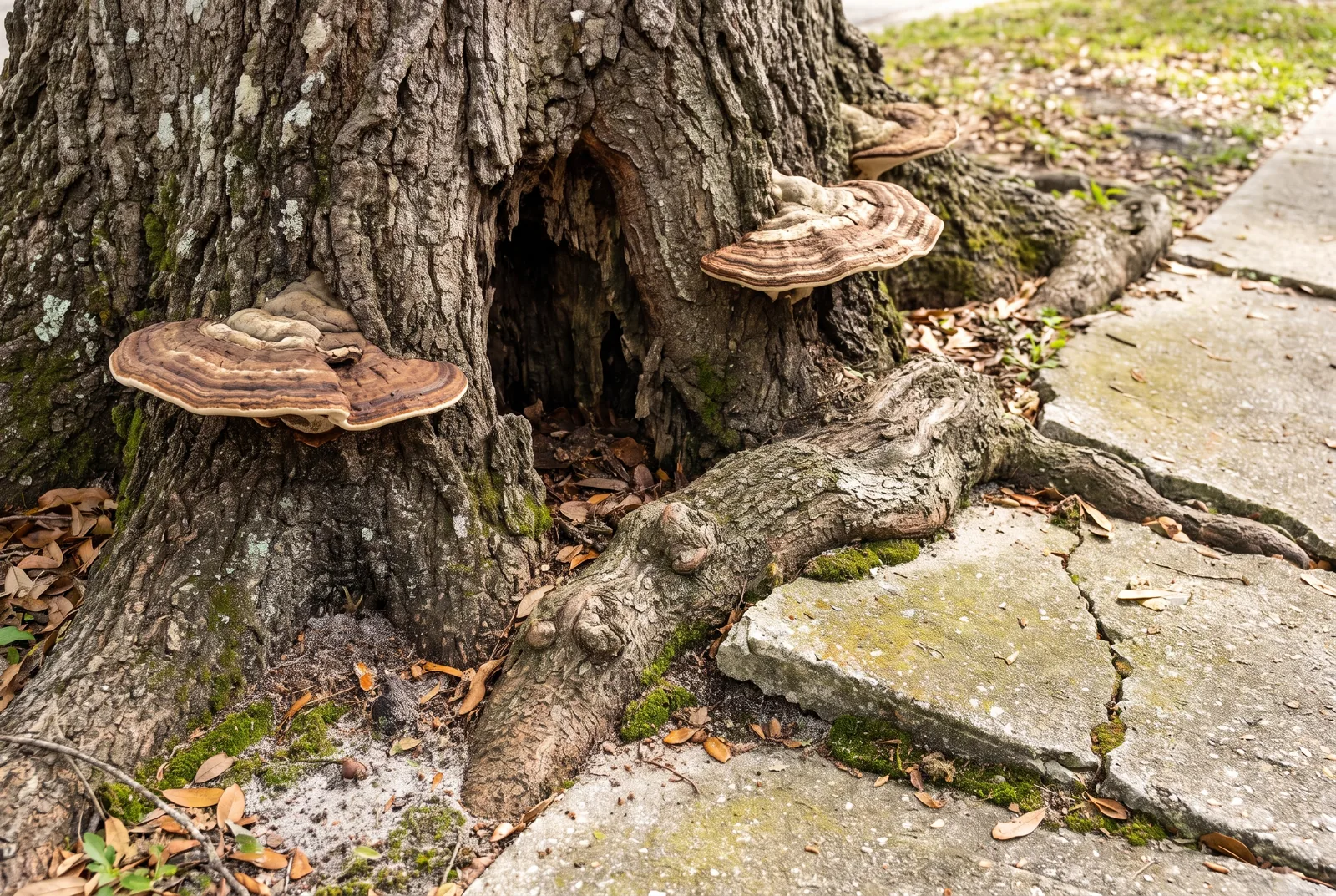
Florida Statute 163.045 says a local government may not require a notice, application, permit, fee or mitigation for the pruning, trimming or removal of a tree on residential property if the owner has documentation from an ISA Certified Arborist or a Florida-licensed landscape architect that the tree "poses an unacceptable risk" — meaning, under the 2022 amendment, a risk that can't be lowered to acceptable by pruning. It applies everywhere in Florida, so even where a permit would normally be required, a genuine hazard tree with the right documentation can come down without one.
What it does not do: let you remove a healthy tree because it's in the way, drops leaves or shades the pool. An arborist who writes a "danger" letter for a healthy tree is risking their certification, and a homeowner relying on a bad one is exposed. We write the letter when the tree honestly qualifies — hollow laurel oaks, root-heaved pines, trees with structural defects over targets — and we don't when it doesn't.
Fort Pierce, Stuart and the county are different
Unincorporated St. Lucie County, and Martin County (Jensen Beach, Stuart, Palm City) especially, protect trees more strictly than the City of Port St. Lucie and don't have the same single-family exemption. If your address is outside PSL city limits, assume a permit or arborist documentation is more likely, and we'll check the right jurisdiction for you.
What happens if you skip it when it IS required
Removing a protected tree without a required permit is expensive: Port St. Lucie's code requires replacement at a 3-to-1 ratio and charges twice the normal application fee. On a lot cleared without a permit, the mitigation can exceed the cost of the clearing. The tree company that did it without checking is the one to be wary of — they'll be gone when the violation notice arrives.
How we handle it
Every removal quote says which route applies to your address: exempt (most single-family yard trees), permit (vacant lots, commercial, protected specimens), or arborist letter under F.S. 163.045 (genuine hazards). We check with the city, file the permit or write the letter when it's needed, and you don't touch the paperwork.
Common questions
Do I really not need a permit for my back-yard oak in PSL?
On an established, platted single-family lot inside the City of Port St. Lucie, usually not — those lots are exempt from the tree-preservation requirements in Chapter 154. We still verify it with Planning & Zoning for your exact address before we cut, because vacant lots, protected specimens and property outside city limits are treated differently.
What if my lot is in unincorporated St. Lucie County or Martin County?
Then the rules are stricter and a permit or arborist documentation is more likely — Martin County (Jensen Beach, Stuart) in particular protects more trees. We check which jurisdiction your address falls in and handle whatever it requires.
Do I need a permit to trim a tree or palm?
Normal pruning, no. Topping and hat-racking are treated as tree damage under the code, which is a reason to hire someone who prunes to ANSI A300 rather than someone who tops. Palms with a clear trunk are protected as trees on non-exempt property, so we check before removing one there.
Can my HOA stop me even if the city allows it?
Yes — HOA architectural rules are private covenants, and F.S. 163.045 doesn't override them. PGA Village, Tesoro, Tradition, the Cascades and the gated St. Lucie West communities still require board approval, and we prepare that packet for you.
How long does a Port St. Lucie tree permit take when one is needed?
For a single protected tree, typically one to two weeks. Land clearing that needs a survey and a mitigation plan takes longer. Genuine hazards can move immediately under a 163.045 arborist letter.
Related: Tree removal · Lot clearing · Cost guide · Insurance guide