Get the trees ready before the storm names start
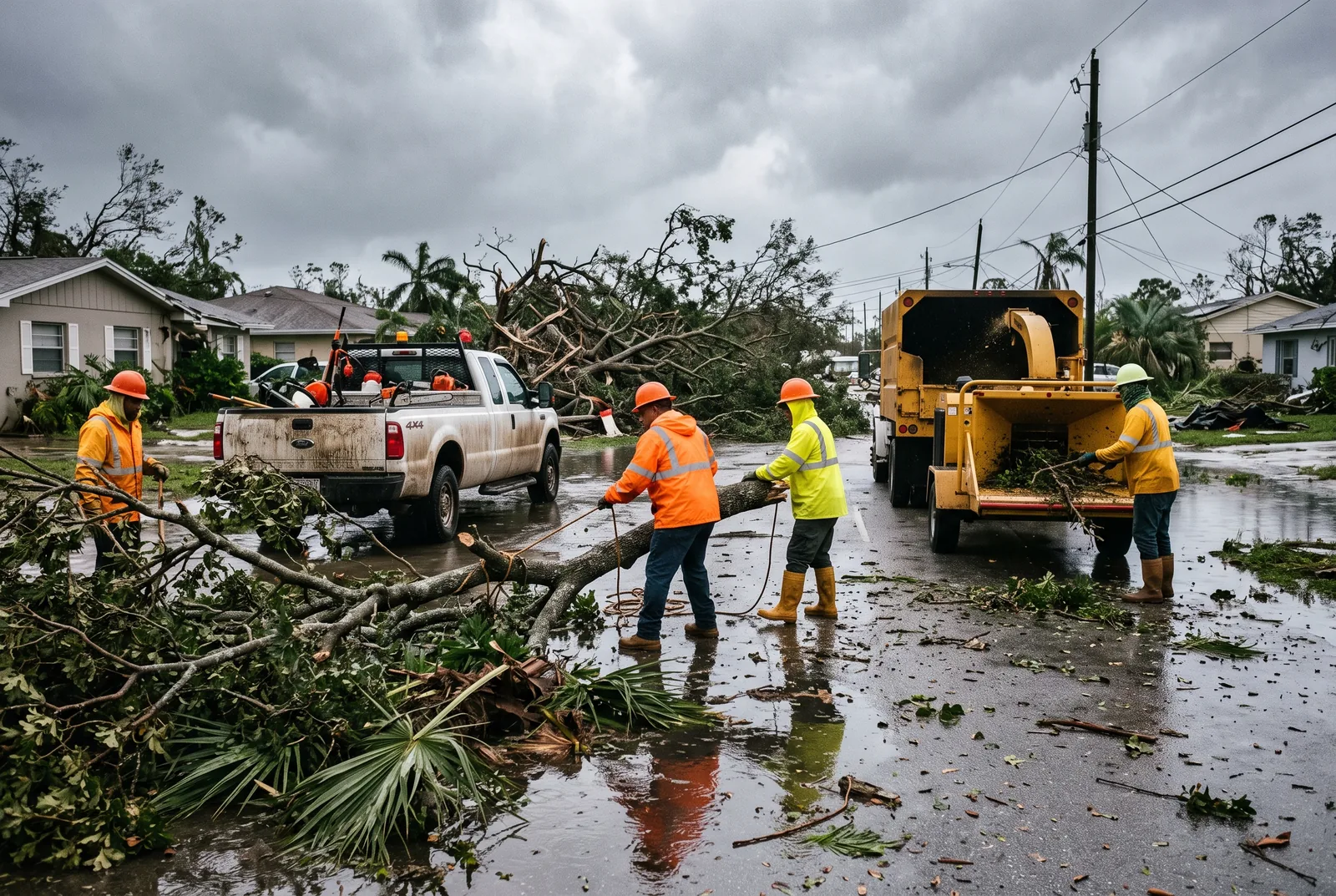
The Treasure Coast has been hit again and again — Frances and Jeanne in 2004, Irma in 2017, Nicole in 2022. The trees that come through a house are almost always the ones a spring inspection would have flagged. We do that inspection.
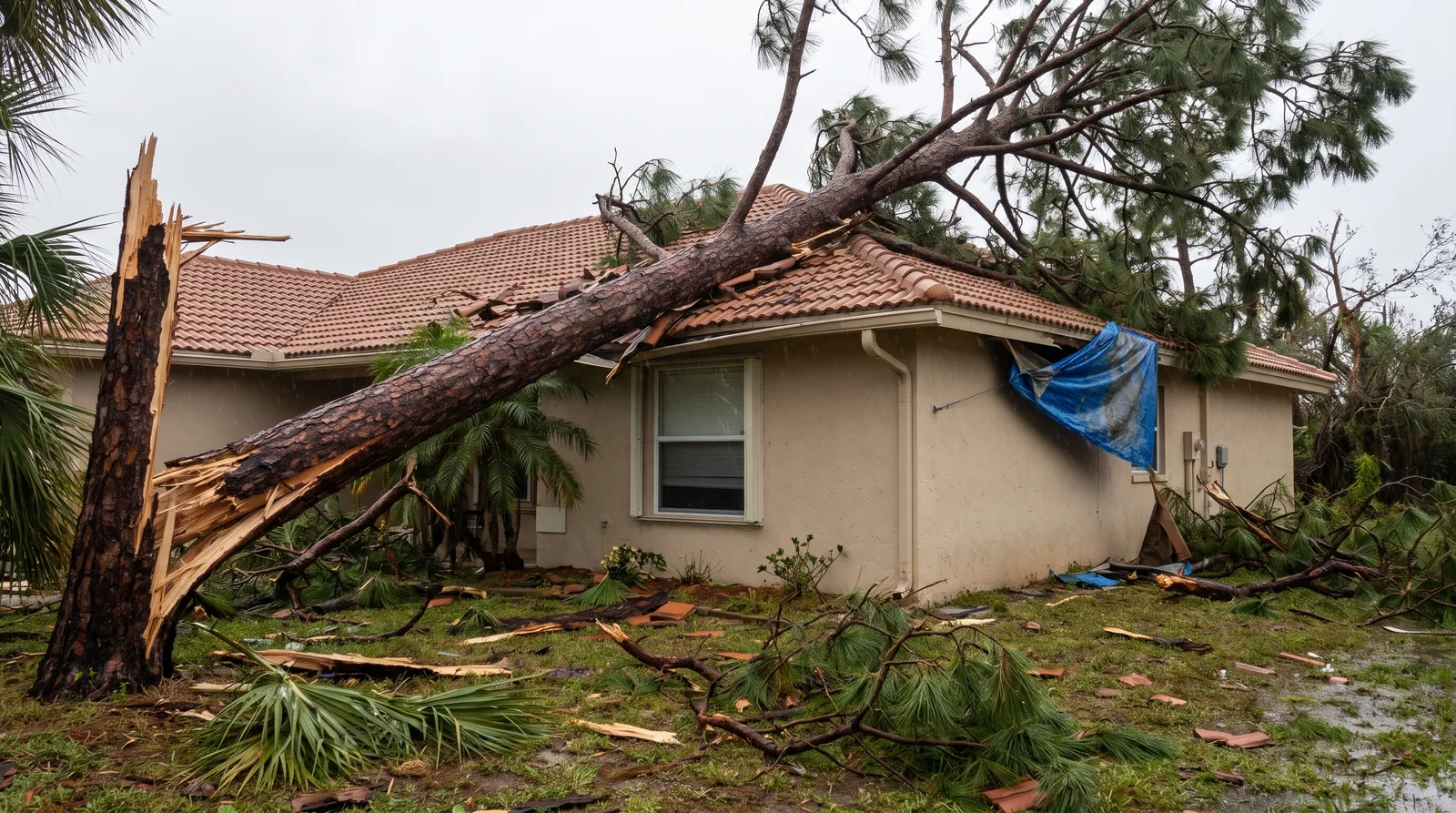
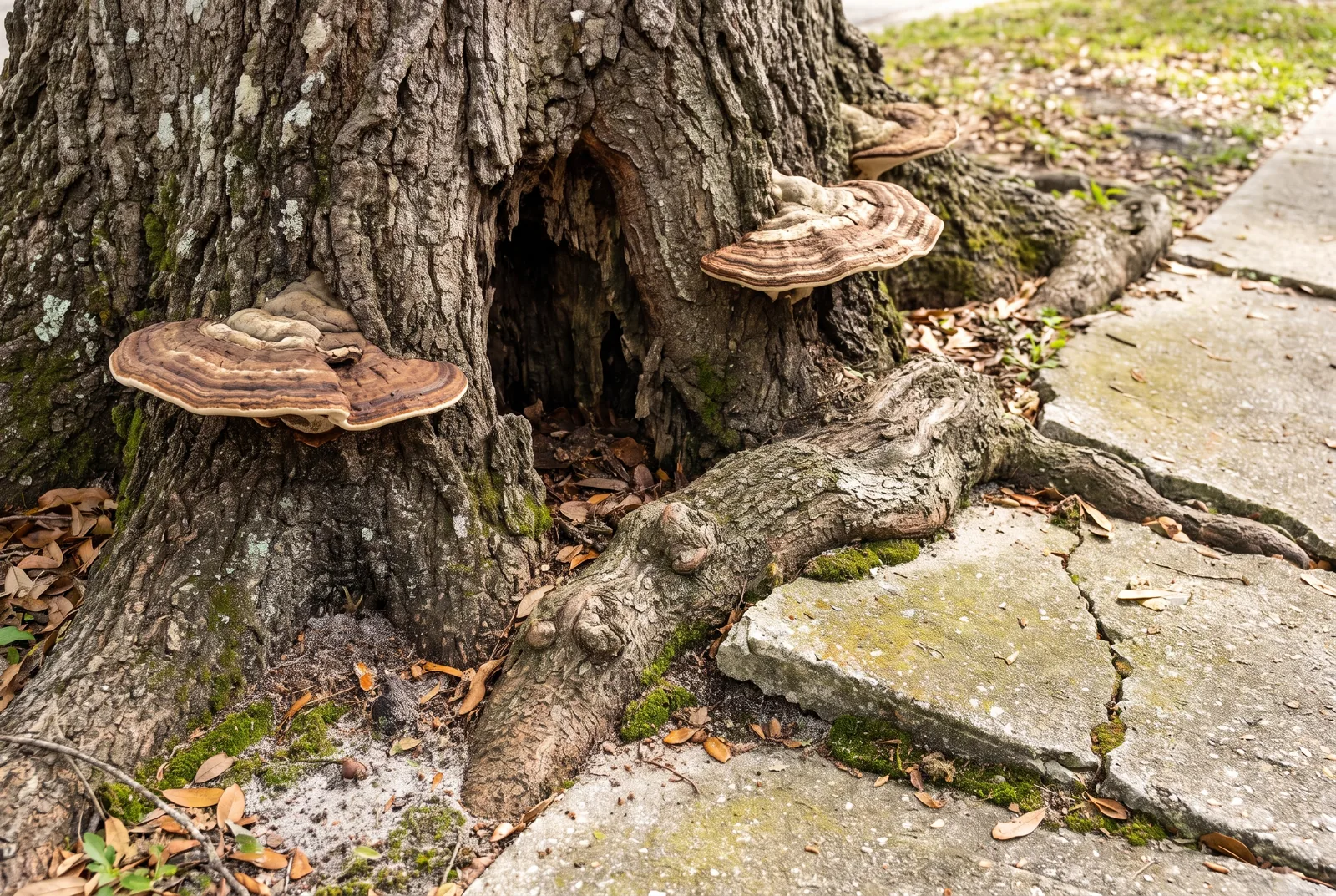
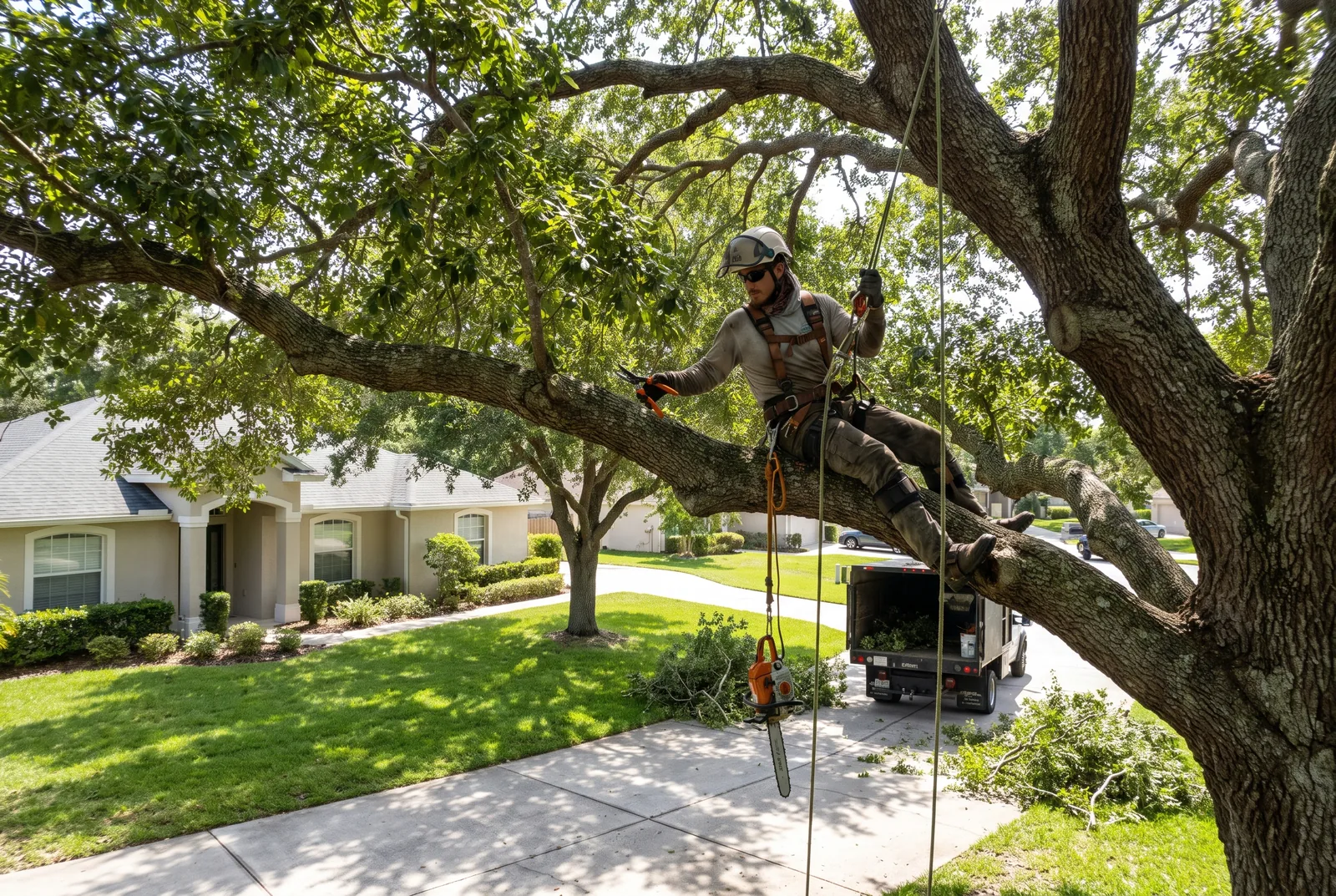
Storm-proofing a yard isn't about butchering every tree before June — it's about finding the few real hazards and fixing them. Our arborist walks the property and looks for the things that actually fail on the Treasure Coast: laurel oaks with decay or a hollow, slash pines leaning after the last wet season, one-sided oaks with all their weight over the roof, dead limbs poised over the pool cage, and root plates lifting on canal-bank trees. Then we reduce end-weight, remove the deadwood, cable a weak union where it makes sense, and take down the trees that are past saving.
A properly thinned canopy lets wind pass through instead of catching it like a sail, and a tree with its deadwood gone has far less to throw at your roof. It's the single most cost-effective thing you can do before a storm, and it's a lot cheaper than the emergency call afterward.
What's included
Hazard inspection
An arborist walks the yard and flags the trees and limbs most likely to fail in a hurricane.
End-weight reduction
Heavy, over-extended and one-sided limbs shortened so wind passes through the canopy.
Deadwood removal
Dead and dying limbs taken out before the storm makes them projectiles.
Hazard removals
Decayed laurel oaks and leaning pines that won't survive the season taken down now.
Cabling & bracing
Weak, co-dominant unions supported where the tree is worth saving.
Clearance
Limbs pulled back off the roof, the lanai and the service drop before the wind gets them.
Storm-prep and hurricane-trimming cost in Port St. Lucie, FL
| Job | Typical price | Notes |
|---|---|---|
| Storm-prep inspection | Free with a quote | Arborist walks the property |
| Single large oak — thin & deadwood | $500 – $1,800 | Most valuable pre-season job |
| Whole-yard storm prep | $900 – $3,500 | Several trees, priced per visit |
| Hazard tree removal | $700 – $3,600 | The one that would've come through the roof |
| Cabling a weak union | $250 – $700 | Where the tree is worth keeping |
| Deadwood-only pass | $300 – $900 | Quick pre-season cleanup |
These are 2026 Treasure Coast ranges so you can budget. Your written price is itemized — removal, rigging or crane, hauling, stump grinding, permit if any — and good for 30 days.
Recent work
Questions we get about storm prep & hurricane trimming
When should I do storm prep in Port St. Lucie?
Ideally in spring, before hurricane season starts June 1 — it gives the tree time to seal its cuts and gets you on the schedule before everyone calls at once. That said, we do storm-prep work right up until a storm is in the forecast, and honest end-weight reduction helps even then.
Does trimming really help a tree survive a hurricane?
Yes, when it's done right. Thinning end-weight and removing deadwood lets wind move through the canopy instead of pushing against it, and takes away the dead limbs that become projectiles. What doesn't help is topping or 'hurricane-cutting' — that weakens trees and palms and makes them more likely to fail.
Which trees are most likely to come down here?
Laurel oaks with internal decay, tall slash pines with root heave in our sandy soil, and any big tree that's grown one-sided over the house. Queen palms lose fronds and pods but rarely the whole tree. Sabals and healthy live oaks are the survivors.
Can you take down the risky tree before the storm instead of prepping it?
Absolutely — if a laurel oak is already hollow or a pine is leaning hard, removing it before the season is smarter and cheaper than paying for the emergency call when it's on the roof.